Design Day 2026
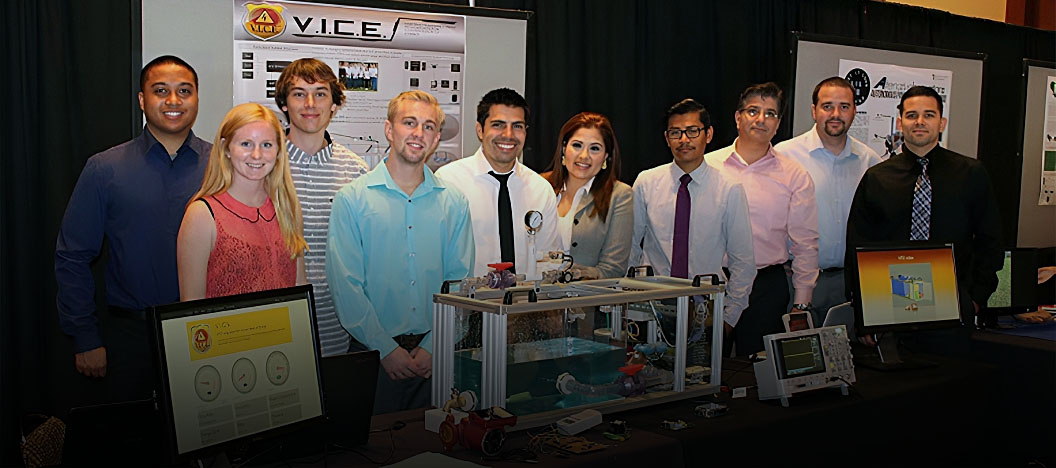
Engineering Senior Design Day 2026 showcased innovative design projects the undergraduate Engineering students create throughout their academic year. This event is a combination of the Engineering Senior Design classes in Aerospace Engineering, Civil, Construction & Environmental Engineering, Electrical & Computer Engineering, and Mechanical Engineering.
For an in depth look at all of the senior design projects for 2026, please visit our digital 2026 Senior Design Day booklet.
Engineering Senior Design Day 2026 was held in Viejas Arena on May 6, 2026 from 1:00pm - 4:00pm (PST).
Design Day Projects

ANCHOR is a modular retrofit kit for commercially available RC boats. The kit preserves the stock motor and rudder but replaces the control electronics to enable long-range telemetry and GPS-based tracking. A Raspberry Pi Pico microcontroller processes onboard control, and communication is done via a LoRa link. User input is controlled by a GUI on shore, which controls the motor and rudder systems, and various sensors on board.
- Team Members: Khalia Wells, Randall Hild, Alberto Serrano, Nathan Trejo, Erik Carlson
- Advisors: Dr. Christopher P. Paolini, Joseph Fields, and Naval Information Warfare Center Pacific
- Team ANCHOR's Video

Team ATHENA (Aztec Technology for Harvesting, Exploration, and Navigation in Astro-mining) is representing SDSU in the NASA Lunabotics 2026 Competition. The team is tasked with the design and build of the propulsion, navigation, control system for a telerobotic rover capable of traversing, excavating, transporting, and depositing lunar regolith. This supports NASA’s Artemis missions to use in-situ resources for lunar construction. ATHENA will travel to the University of Central Florida and Kennedy Space Centerto compete in a simulated deployment lunar mission against other universities.
- Team Members: Giovanni Diaz-Lopez, Gio De Guzman, Satya Sai Nagarjuna Varma Nampalli, Bailey Morgan, Kai Pichay, Oscar Sou, Jacob Ibay, Charmay Hoang, Ava Aiken, Gecsan Reyes
- Advisors: Dr. Christopher Paolini and Dr. Scott Shaffar
- Team ATHENA's Video
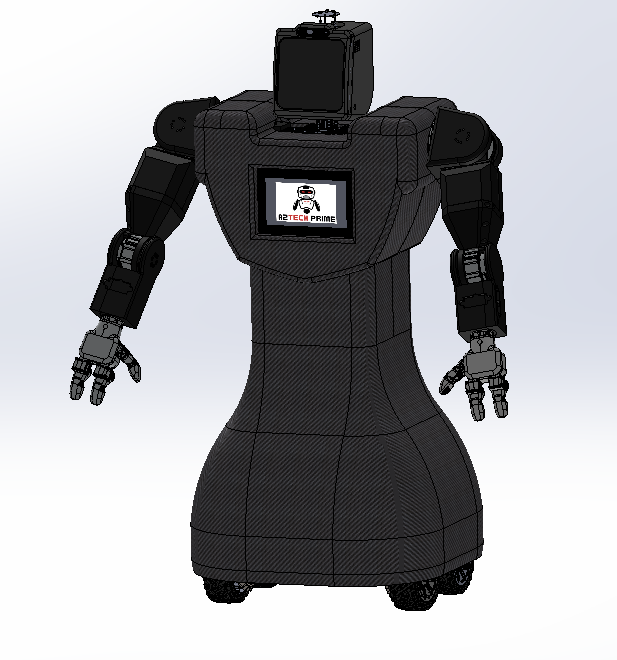
This project is the second phase of the SDSU AI Center’s AztechPrime project. The goal of this project is to design a modular humanoid robot for emotional and social interaction. Phase two of this project focused on reimagining the existing chassis, designing and engineering robust robotic arms, and integrating these changes into the existing system for autonomous movement and interaction with others.
- Team Members: Chris Krikorian, Dominic Luscher, Edwin Alvarado, Laith Oraha, Parsa Farahani, Ray Kim, Sarai Santana, Sean Hashem, Tanner Moore, Victor Lira
- Advisors: Dr. Christopher Paolini, Dr. Scott Shaffar, Dr. Aaron Elkins
- Team AztechPrime II's Video
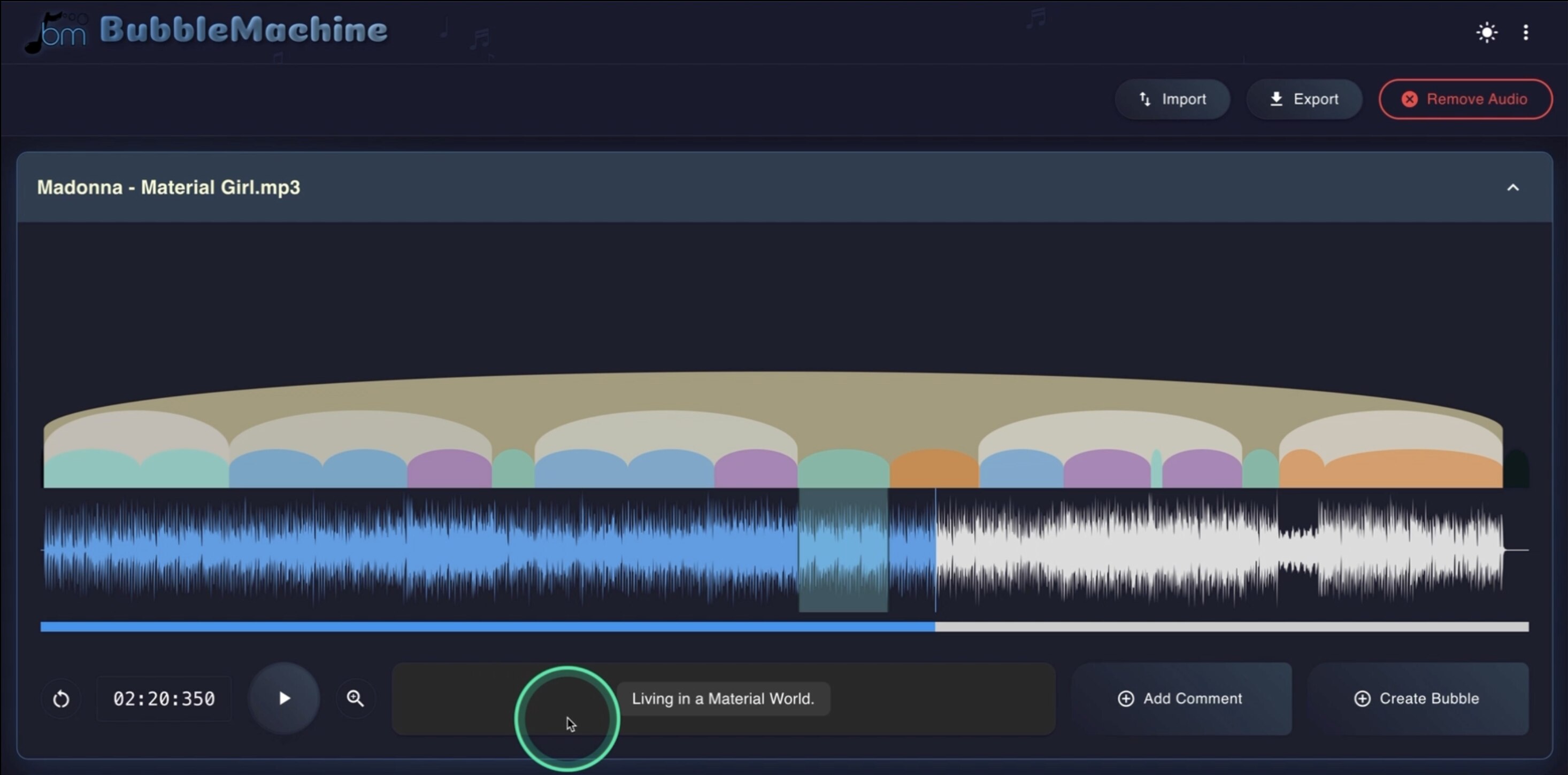
BubbleMachine is a web-based tool created for people in the music industry that works with audio in a clear and intuitive way. Users can load audio stored on their device or extract audio from video files, then create precise playback markers called “bubbles” to add comments and feedback. The project focuses on improving tablet usability, touch interaction, and performance, while keeping all media local to the user’s device for privacy and copyright safety.
- Team Members: Brianna Martinez, Sakshi Bharambe, Tristan Deleon, Bilal Mohammad
- Advisor: Dr. Scott Lipscomb - SDSU School of Music and Dance
- Team BubbleMachine's Video
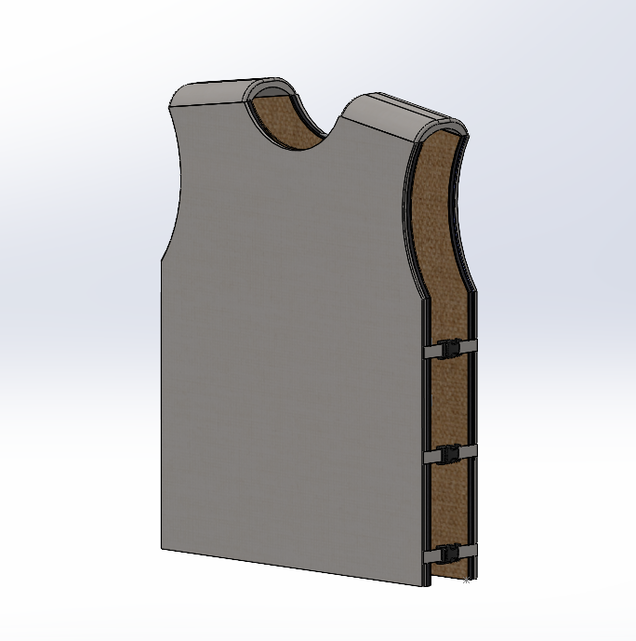
The Human Cooler project designs a wearable personal cooling device that is capable of shedding enough heat to allow the user to perform activities of moderate to high levels of physical exertion while maintaining a core body temperature of 100.4℉. This device is applicable to those who are required to perform strenuous physical activity in environments with extreme heat in order to help prevent these individuals from developing heat related illnesses.
- Team Members: Megan Kojima, Ian Mexas, Madeline MacDonald, Serena Nguyen, Calvin Viriyavong, Joshua Arjona, Chelsey Manlangit, Nate Muttera, Nolan Conrad, Micah Davis
- Advisors: Ken Arnold - HTE, Dr. Scott Shaffar - SDSU, Dr. Christopher Paolini - SDSU
- Team CryoBod's Video

This project focuses on designing an in-circuit testing fixture that integrates mechanical and electrical components to test the functionality of PCBAs that are to go into hospital grade medication dispenser. The fixture performs a bed-of-nails test on the PCBA by clamping it securely and sending electrical test signals to the PCBA using spring loaded electrical test probes.
- Team Members: Jacob Butcher, Samantha Castellanos, Kaye-Angeli Delacruz, Edgardo Gonzalez-Galvez, Kylyn Hoover, Sarah Hsu, Trek Hugg, Brandon Nguyen, Mia Sevidal, Brett Wimmer
- Advisors: Scott Freemen - BD , Hossein Khadiri - BD , Dr. Scott Shaffar - SDSU, Dr. Christopher Paolini - SDSU
- Team CTRL+ALT+HEAL's Video

The purpose of the project is to develop a Motor Generator Inverter Controller that tests the characteristics of an AC machine under various operating conditions. The system inputs a 1ϕ 120V AC outlet power into a PowerFlex 525 Variable Frequency Drive (VFD) that outputs 3ϕ 208V AC into the motor. The motor drives the generator through a shaft and the generator produces 3ϕ 208V AC power. The 3ϕ 208V is supplied into a second PowerFlex 525 VFD that also outputs 3ϕ AC Power. This creates a full motor/generator inverter system used to study speed control and voltage.
- Team Members: Jovahn Hanna, Willis Do, Edward Cordova, Joshua Bantau, Alejandro Perez
- Advisor: Vidyashankar Rangaswamy - General Atomics
- Team DC/AC's Video
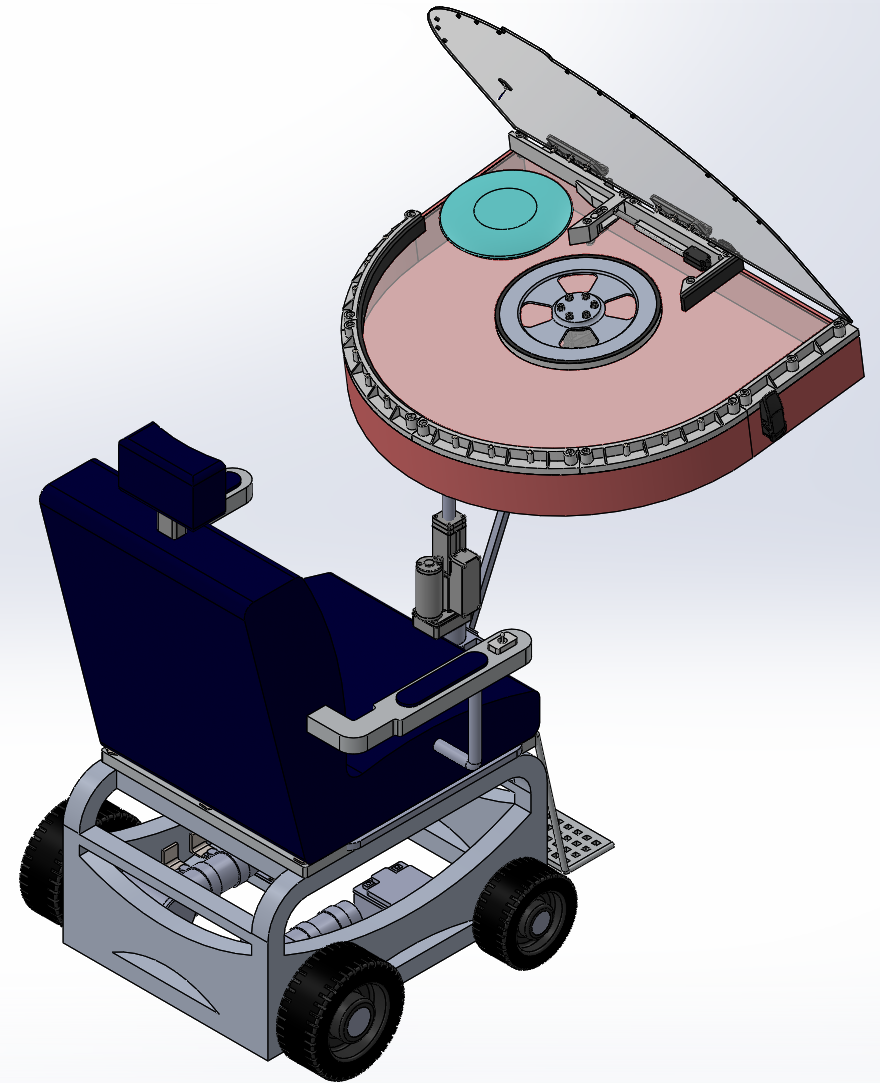
This detachable wheelchair-mounted disc golf launcher was built to allow quadriplegic veterans to participate fully in the game of disc golf. It enables users with limited mobility to safely and accurately launch a disc at their desired power and angle using accessible controls. The launcher promotes inclusivity, independence, and competitive play, and will be used in the National Veterans Wheelchair Games this summer.
- Team Members: Maddox Curley, David Aguilar, Cody Marinshaw, William Salsberg, Miral Ahmed, Andrew Gamez, Devan Mayer, John Hayali, Juan Cruz, Hadi Alwakeel
- Advisors: Louis Irvin - PVA, Dr. Scott Shaffar - SDSU, Dr. Christopher Paolini - SDSU
- Team DiscAbility's Video

This is a project sponsored by the General Atomics Electromagnetics Group. The project involves the design, prototype build and test of a ligh- weight thermal control valve - known as a valve mixer. A valve mixer is a mechanical device that controls fluid temperature by blending fluids of different temperatures to provide consistent and precise fluid temperature and control.
- Team Members: Jaden Li, Noah Deneau, Natalie Puspos, Nicolas Doutt, Emanuel Diaz-Sanchez, Sara Hilera, Aiden Kiswoto, Merabi Khachidze, Tarun Nair
- Advisors: Travis Scott - General Atomics, Vidyashankar Rangaswamy - General Atomics, Scott Shaffar - SDSU, Christopher Paolini - SDSU
- Team H.E.A.T.'s Video

The goal of this project is to create a repeatable and scalable methodology to build a novel hydrographical geospatial database of waterbodies viable for water co-located solar (AquaPV). The project involves identifying waterbodies, creating highly accurate polygons of them, assigning a multitude of metadata to each polygon, determining the feasible buildable area of each waterbody, and determining the proximity to major infrastructure like transmission lines to assess economic feasibility.
- Team Members: Eren Ugur, Wilson Cao, Mohammed Alsharif, Alden Cam, Yousif Faraj
- Advisor: Dr. Saeed Manshadi - ECE Dept
- Team HydroGlow's Video

This project involves the design, fabrication and test of an induction welder for joining thermoplastic composites, specifically carbon fiber-reinforced PEKK polymers. The induction welder is planned to be capable of welding plates (or curved cylindrical panels)from 4 plies to up to 32 plies thick (0.5 mm to 4 mm) and with dimensions of 30 cm x 30 cm. The induction welding head uses a pancake-type coil, which moves along the weld region in the x-y plane at a specified distance from the plate. For curved panels, the welding coil includes xyz translation.
- Team Members: Christian Miller, Matthew Richard, Ryan Pursel,
Elliot Berman, Abby Gittings, Andrew Margo, Abel Estrada-Martinez - Advisors: Dr.Satchithanandam Venkataraman - SDSU, Dr. Scott Shaffar - SDSU, Dr. Christopher Paolini - SDSU
- Team Inductifuse's Video

This report outlines the conception, design, development, and testing for the DC-to-AC 3 phase Inverter project under the sponsorship of SDSU professor Tong Huang. The primary objective is to develop hardware-usable Pulse Width Modulation (PWM)-control-algorithms for a grid-tied inverter. These standardized control algorithms will aid Professor Tong Huang with his research on grid security in the Texas electricity market (ERCOT).
- Team Members: David Ramos, Nicholas Farcas, Ruth Burks, Julius Harris, Gonzalo Morales
- Advisor: Dr. Tong Huang - ECE Dept
- Team InverTech's Video

The robotic palm trimmer end effector replaces manual palm trunk trimming to improve safety and ease. It features an improved circumferential track system and a radial positioning stage that has a 360° reach around the trunk to cut fronds. The trimmer integrates with the Robotic Palm Elevator that operates through a shared controller and power source. The elevator moves vertically via a joystick control while maintaining constant arm tension as it performs the cutting process.
- Team Members: Alyssa J De La Torre, Andres Santos, Christian Montano, Lukas Hruza, Esha Lata Ram, Kanji Hirayama, Daniel Cueva, Coltin Haniotakis, Kevin Lee, Niccolas Armenta
- Advisors: Max Winiarz - Max Engineering, Dr. Scott Shaffar - SDSU, Dr. Christopher Paolini - SDSU
- Team Mechatropics's Video

Our senior design team implemented a fully tapeout-ready AES-256 CBC encryption/decryption core, completing the full RTL-to-GDSII ASIC design flow including synthesis, place-and-route, DRC/LVS verification, and post-layout simulation. In parallel, we developed an FPGA-based prototype on a custom PCB with a UART-to-USB interface, enabling secure communication with a laptop through a custom GUI and driver software. The system demonstrates practical hardware cryptography and secure hardware integration inspired by Trusted Platform Module (TPM) architectures.
- Team Members: Monica Michael, Angel Martinez, Hector Ramirez, Matthew Chang, Sydney Kim
- Advisor: Dr. Ke Huang - ECE Dept
- Team NAND5's Video

The goal of this project is to create a novel induction system that is solenoid-like and that will be able to melt metal powders within a few nano to micro seconds. This heat induction system uses an Electro-Nano-Pulse (ENP) power supply to generate a recurring current with each pulse at a specific frequency, which generates a changing magnetic field that produces sufficient heat to reach near the metal powder's melting point.
- Team Members: Khattab Ramadhan, Antonio Solis, Jena Leia Hernandez, Kevin Vu, Justin Nedd, Thu Vu, Arturo Galeana
- Advisors: Dr. Wenwu Xu – SDSU , Dr. Scott Shaffar – SDSU, Dr. Christopher Paolini – SDSU
- Team NanoFlux's Video

Masimo designs instruments, sensors, and cables that terminate connections in a variety of multi-contact connectors. When connectors are repeatedly cycled through insertions and removals, they wear the plating on the contacts and/or the pins and sockets themselves. Our device is capable of continuously monitoring a multi-contact connector for a change in contact resistance over the duration of connector insertion/removal cycles.
- Team Members: Alan Alaniz, Jacob Carpenter, Evan Gittings, Saad Sarsam, Yousif Yelda
- Advisor: Glenn Pohly - Masimo
- Team Ohmies's Video

This project focuses on key plasma diagnostic systems for General Atomics’ DIII-D SupRISE Test Stand, which utilizes an RF-inductively generated ion source to replace the current arc-filament system on the tokamak. The Plasma Eater diagnostic system and Faraday shield developed as part of this project are intended to enable the SupRISE Test Stand to operate at higher power levels while providing more accurate and reliable data acquisition of desired plasma parameters.
- Team Members: Avery Buehler, Robert Adams, Jake Hooper, Khaled Mohaisen, Krista Patel, Daniel Self, Clayton Alvarez, Jimin Chae, Son Huynh, Ulises Urbina
- Advisors: Dr. Brendan Crowley - General Atomics, Evan Kallenberg - General Atomics
- Team Plasma Frontiers's Video

This project involves creating a mechanically steered high frequency antenna on a gimbal assembly for use with drone operations. The design will allow for a smaller antenna with a narrower beam to provide a high gain as compared to prior solutions. This is designed to be used on commercial off the shelf drones, and is designed with the intentions of being used in jammed environments.
- Team Members: Frederick Brinkman, Jon Dietz, Edson Mosqueda , Hailey Zema, Mark Tran, Noah Gist , Kristof Balasanian, David Aragon , Tomas Blatchley, David Schnack
- Advisors: Randall Olsen - Naval Information Warfare Center, Dr. Christopher Paolini - SDSU, Dr. Scott Shaffar - SDSU
- Team Project Theia's Video

This sponsored project with General Atomics Aeronautical Systems focuses on designing, building, and testing an optimized aircraft propulsor that improves efficiency and reduces noise compared to a provided baseline propeller. An interdisciplinary student team developed the propulsor and a dedicated testbed to compare thrust, efficiency, and acoustic performance using off-the-shelf sensors and data acquisition systems, demonstrating measurable advancements in quiet, efficient propulsion technology.
- Team Members: ME: Patrick Ibarra, Erik Ramirez, Fraser Meagher, Jacob Schuch, Dawson Gregg
ECE: Omar Aviles, Randy Figueroa, Isabella Segovia, Kohki Kita
AE: Julio Bravo, Jackson Tuday, Kiara Bolden - Advisors: Christopher Sam - General Atomics, Dr. Scott Shaffar - SDSU, Dr. Christopher Paolini - SDSU, Dr. Roni Goldshmid - SDSU, Dr. Joseph Katz - SDSU
- Team PropOps's Video

Our multidisciplinary team developed an efficient UAV for the California Unmanned Aerial System Competition. This competition requires students to design, integrate, and demonstrate a small uncrewed aerial system capable of waypoint navigation, package drop, package delivery, target identification, and target localization. This competition is organized by California State University and Mojave Air & Space Port at Rutan Field. This competition is points-based, and open to teams of students from universities, colleges, and community colleges. The competition will be held at the Mojave Air & Space Port at Rutan Field on June 7th, 2025.
- Team Members: ME: Patrick Ibarra, Erik Ramirez, Fraser Meagher, Jacob Schuch, Dawson Gregg
ECE: Omar Aviles, Randy Figueroa, Isabella Segovia, Kohki Kita
AE: Julio Bravo, Jackson Tuday, Kiara Bolden - Advisors: Dr. Scott Shaffar - SDSU, Dr. Christopher Paolini - SDSU, Dr. Roni Goldshmid - SDSU, Dr. Joseph Katz - SDSU
- Team Quetzal's Video

The robotic gaming partner includes an AI powered 6-DOF arm driven by the NVIDIA Jetson Nano. The robot uses camera vision to play a 2 dimensional game on a whiteboard against a human user. When a user approaches the system, a touchscreen display greets them and allows them to choose which game to play against the robot. An ultrasonic sensor scans the 'warning' and 'play' zone to allow for operation of the system. A custom ADC was developed to convert the analog output of the sensor into the GPIO pins of the Jetson Nano.
- Team Members: Antonio Alcala, Giovanni Echeverri, Kevin Saleem, Rhilo Novuno Sotto, Valerie Joy Pinto
- Advisors: Dr. Christopher P. Paolini - SDSU
- Team R.G.A.'s Video

This project's goal is to design and construct a single flow-cell test chamber for testing multiple gas sensors simultaneously. The chamber accomodates an array of gas sensors. A data acquisition (DAQ) system is incorporated to collect the electrical output from each sensor channel and transmit the measurements to a computer interface, where the real-time data is displayed on a screen for monitoring and recording.
- Team Members: Peter Kodheli, Karam Alshaikh, Zachary Cartwright, Aaron Goldis, Brayand Perez, Christopher Westover, Kayla Hicks, Zaiver Ayarza, Andraws Yaqo, Keith Andrew Quiambao
- Advisors: Dr. Mike Frank - AtmoSense, Dr. Scott Shaffar - SDSU, Dr. Christopher Paolini - SDSU
- Team SenseTec's Video

The Automated Synchro Tester is a joint Mechanical Engineering and Electrical & Computer Engineering project sponsored by General Dynamics. The tabletop system autonomously rotates a synchro to specified mechanical angles while measuring the corresponding electrical angle to calculate angular error. Programmed in LabWindows, it reduces test cycle time and operator ergonomic risk. The system integrates precision actuation, sensing, and data acquisition to improve production efficiency, measurement reliability, repeatability, and reproducibility.
- Team Members: David Jazo, Joseph Sagmani, Fouad Sabeeh, Sonny Shin, Albert Shamoun, Scott Melton, Ava Halkola, Shomrick Bhadra, Christi Saengsavang
- Advisors: Adrian Aldaco—General Dynamics, Brandon Pelham—General Dynamics, Dr. Scott Shaffar - SDSU, Dr. Chistopher Paolini - SDSU
- Team SyncLink's Video

To help the Loisaba Conservancy in Kenya with their mission to monitor black rhinos, a low-power, solar-powered, AI trained, LoRa capable camera system has been designed, fabricated and test providing the ability to send alerts when the rhinos are spotted. The system sends a picture and the location data to the Conservancy staff providing them data on the best locations to observee the rhinos. The system includes an enclosure rated an IP67 and includes the option to be mounted to either a tripod or trees.
- Team Members: Aliza Siddiqui, Amelie Salas, Abdullah Dost, John Flores, Ryan Hovan, Joshua Lange, Brent Mullins, Ethan Quach, Jonathan Wessel, Jadyn Yamashita
- Advisors: Katie Garwood, San Diego Zoo Wildlife Alliance, Dr. Scott Shaffar - SDSU, Dr. Christopher Paolini - SDSU
- Team WildSights's Video